Thriving in Relationships — Five Tools for Success
Learning and honing skills for strengthening and repairing relationships of all types.
5-Week Online Workshop
TBD 2027
Relationships can be the most rewarding and most challenging aspects of our lives. Join us as we learn five key tools for improving all of our relationships, including with friends, family, co-workers, community members, and even ourselves.
We’ll learn how to use appreciation to experience gratitude and aliveness, use empathetic listening to be present when someone is expressing something that’s hard to hear, use honest expression to express needs in a way that’s easier for someone to hear, use needs-based negotiation to find strategies for meeting a group of people’s needs, and use relationship repair when a bump causes a disconnection.
These tools are based on the work of Marshall Rosenberg and Nonviolent Communication (NVC). If you are new to NVC, this workshop introduces key NVC concepts through practical application. If you are experienced with NVC, this workshop offers a refresher on NVC concepts and a chance to practice relationship skills in a supportive group environment.
Expect a clear explanation of each tool and why it works, exercises, supportive small group practice, and compassionate answers to your relationship questions.
Steve’s class has inspired me so much and given me the tools to unlearn the harmful habits of my culture while providing me with a clear path towards a self-responsible life where I get to honor my truth and have deeper intimacy with my loved ones. I really appreciate Steve’s authenticity, vulnerability, and presence and highly recommend his classes to anyone interested in living a more connected life.
Sessions
Session 1: Gratitude and Appreciation
Gratitude is an internal state of thankfulness. Appreciation is the art and practice of expressing that gratitude. Marshall Rosenberg’s nickname for gratitude is “Giraffe Fuel for Life,” because he understood that giving and receiving of gratitude with a certain quality of presence was the greatest source of energy for living a compassionate life. When gratitude and appreciation are abundant in our lives, we experience more aliveness, fulfillment, and resilience in our relationships.
Session 2: Empathy
In NVC, empathy is the practice of putting attention on feelings and needs. Self-empathy is putting our attention on our own feelings and needs. Empathy for another person is putting our attention on their feelings and needs.
Empathy isn’t what we say, it is more a quality of presence. Empathy can be spoken or be silent, and is primarily an energy that comes through the eyes. Empathy is commonly misunderstood as sympathy, fixing, or consoling. When we are truly empathizing, we can connect deeply with another person, even if we disagree with the person’s perspective. It allows us to show our care for the other person without taking on their struggles as our own.
Session 3: Honest Expression
NVC is built on the belief that the most precious thing that one person can give another is that which is in their heart — feelings, needs, and requests. Honest expression is a vulnerable and powerful practice for creating and deepening relationships of mutuality and collaboration, while maintaining autonomy and integrity. Expressing ourselves honestly requires awareness of our intentions, the ability to make pure observations, expression of authentic feelings, connection to needs, and effective requests.
Session 4: Needs-based Negotiation
It is commonly understood in NVC that conflict is never between needs, rather it is between strategies. When working through a situation with two or more people, the goal is for everyone to fully express all of their feelings and needs. And at the same time, to receive sufficient empathy for what they have shared. When this happens, imagination and creativity are liberated so that optimal solutions arise.
Session 5: Relationship Repair
Relationship repair is the art and practice of tending to hurt feelings and unmet needs in order to heal from the pain of conflict and re-establish connection and trust. Each person expresses what they said and did that did not meet their own and other people’s needs. Likewise offering empathy to themself and each other for those unmet needs. When repair is successful, it helps us learn from our previous actions without self-judgment and thereby strengthening our relationships going forward.
Key Course Outcomes
- Experience more connection, fulfillment, and resilience in your relationships.
- Learn tools for having a life filled with gratitude.
- Learn effective ways for showing your appreciation for the people in your life.
- Learn how to show your care for someone else without taking on their struggles.
- Improve your self-care by putting your attention on your feelings and needs.
- Learn how to hear what someone really needs, even when they speak in words that are painful to hear.
- Learn how to make requests that are more likely to result in your needs being met.
- Learn how to deepen your relationships by sharing your feelings and needs.
- Practice developing optimal solutions when different people have different needs.
- Learn how to see the needs behind strategies so you can offer other strategies that meet more needs.
- Practice techniques for healing from the pain of conflict and re-establishing connection and trust.
- Learn from your previous actions without self-judgment.
- Learn how to strengthen relationships after a conflict.
Workshop Recordings
The sessions will be recorded. Please note that if you choose to ask a question or make a comment on camera during the call, you will be included in the recording. You are welcome to use a pseudonym and/or keep your video off if you have privacy concerns.
This recording is shared with all registered participants within 48 hours of the session and may also be used in future online learning programs.
You may not share the workshop recordings with other people.
It’s not possible through words alone to express the depth of my gratitude for everything you do and the way in which you do it. I count myself lucky for having met you and had the opportunity to learn and laugh and cry and grow with you and the other people I’ve been in classes with over these past two years. My life and the lives of so many are enriched by your openness and care in sharing your journey and evolution. So, thanks and thanks and thanks.
About the Instructor
Compassion Camp Co-Director and Nonviolent Communication Faculty As a lifelong peace, justice, and ecology educator and activist with over 40 years of community living, Steve has sought to integrate personal and social transformation in his own life, in the communities where he lives, and in the larger society. His passion for integral living and thinking has led him to study and experiment with a wide range of spiritualities, psychological systems, and social theories as they relate to creating a more just and sustainable world.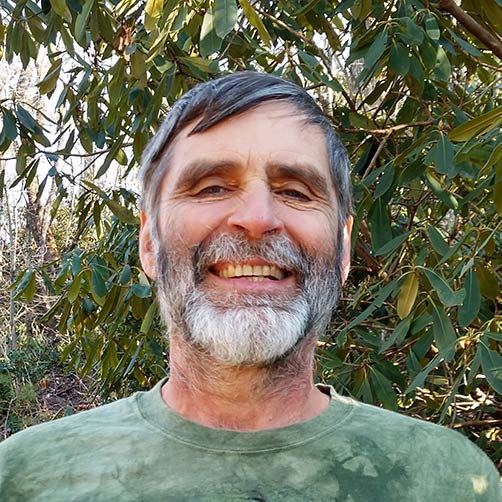
Steve Torma
Financial Co-responsiblity and Scholarships
Because some people have more financial means than others, we have created a sliding-scale fee system to accommodate a range of economic realities. We offer several price tiers and leave it to you to select the most appropriate tier. The price range aims to take into consideration economic disparities, historical injustices, and personal circumstances. The system is designed for those with more resources to support those with less.
At Earthaven and through the School of Integrated Living (SOIL), we strive to practice a culture of financial transparency, authenticity, and generosity. Trusting each other to assess their needs, what is within their ability, and when to ask for help. We are excited to include you in our experiment with financial co-responsibility.
We are now offering self-selected scholarships for many of our programs. No proof of need, no questions asked. Just the clear intention of trust that registrants can assess whether the cost of a program is truly a barrier to attendance and the growth of self and community our programs seek to foster.
SOIL endeavors to support the healthy flow of all resources; whether that be monetary or the skills and information that seed cultural change; and widen the doors of accessibility to what we offer.